
How should Govind Dev Ji darshan be planned?
Govind Dev Ji Temple is among Jaipur’s most visited Krishna shrines and sits close to the City Palace precinct. Worship follows a daily ritual calendar with separate darshan windows, rather than a museum schedule that remains constant all year. Timings quoted online are approximate; ask temple staff or check an official notice for the current aarti before travelling. Popular services can draw a dense queue, especially on festival dates, so leave margin in the cab plan. Devotees commonly remove footwear and pass through a security arrangement; keep bags small and follow signs about photography or phones. The atmosphere is devotional and communal, not a quiet gallery. Avoid blocking the flow to take pictures. If attending a particular aarti is essential, share that exact window with the driver and confirm where the car can collect you afterward.
What is distinctive about Moti Dungri Ganesh Temple?
Moti Dungri Ganesh Temple is a prominent white shrine at the base of Moti Dungri Hill, a landmark that also has a private palace on its summit. Do not assume the hilltop residence is open to visitors; the temple is the public devotional destination. Tuesday worship and Ganesh-related festivals can bring heavier foot traffic and slow nearby roads. Follow the shoe-storage arrangement, keep children close and do not photograph a restricted interior. The visit may be brief on an ordinary day, but queue time can expand sharply when many devotees arrive. Allow roughly half an hour or more as a planning estimate, then verify current opening and worship details at the entrance. Nearby Birla Mandir is a separate stop, with its own courtyard and visitor rules.
Why do visitors include Birla Mandir?
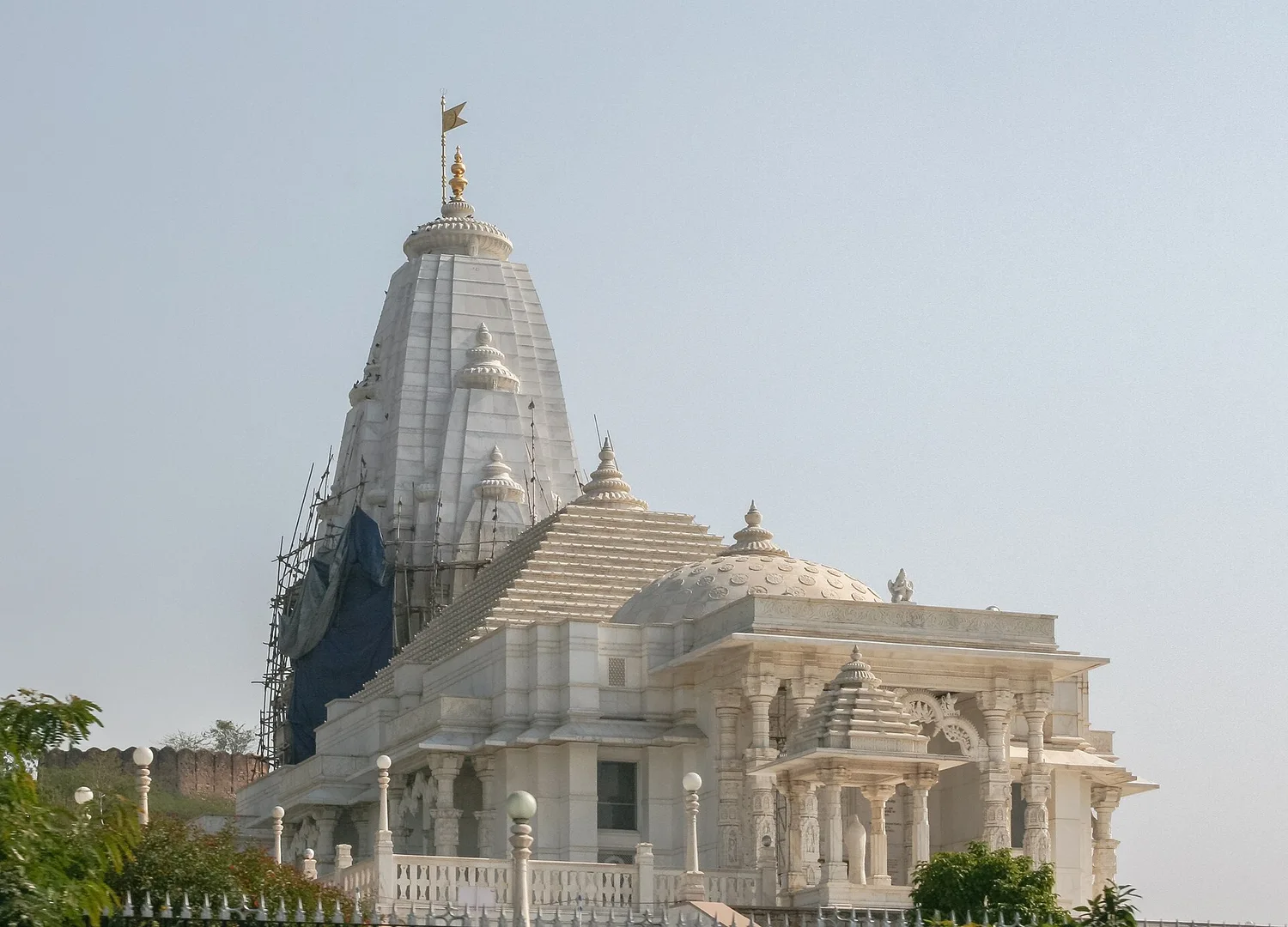
Birla Mandir, also called Lakshmi Narayan Temple, is known for its white marble construction and setting below Moti Dungri Hill. It is a place of active worship, so visitors should dress modestly and keep voices low. Footwear is removed before entering the prayer area; volunteers indicate where to leave it. Photography limits can apply in the sanctum or other sections, even if the exterior is visible from outside. The temple’s opening periods can vary with rituals and special days, so confirm on arrival rather than relying on a copied timetable. Give the stop enough time to walk through the compound without rushing devotees. The evening exterior can be attractive, but the actual lighting and gate access are subject to local arrangements. A taxi can set a drop on the designated approach road, not necessarily at the prayer-hall door.
Where does Galta Ji sit in the Aravalli landscape?
Galta Ji is a temple complex in a rocky valley east of central Jaipur, associated with sacred water tanks and pilgrimage traditions. Visitors encounter a series of shrines, courtyards and pools rather than one single temple room. The terrain includes uneven paving and walking between structures; comfortable shoes help. Monkeys live around the complex, so keep food sealed and do not encourage animals with snacks. Water levels and access to particular kunds can change, and visitors should follow posted directions about bathing. A calm visit needs more time than a quick vehicle stop because the valley route requires walking. Use the temple’s signed passenger zone and agree a separate collection pin because inner courtyards are pedestrian areas. The Galta Ji site notes can help decide whether the climb suits your party.
How can Khole ke Hanuman Ji be approached respectfully?
Khole ke Hanuman Ji Temple is a large hillside shrine on Jaipur’s eastern side, with an approach that can involve steps, slopes or a vehicle climb depending on the current access arrangement. The complex draws local devotees and can be crowded on Tuesdays, Saturdays and festival days. Check whether private cars may reach the upper area that day; traffic management sometimes changes during gatherings. Wear clothing that covers shoulders and knees, carry water and keep offerings secure until you are inside the permitted zone. The site is not simply a photo viewpoint: allow space for prayer and do not stand across a procession route. Visitors with knee or balance concerns should ask about the nearest accessible drop before beginning the walk. A driver familiar with local access can help, but cannot promise entry past a temporary barricade.
When are aarti times and entry details reliable?
Temple rituals follow their own calendars, and special dates may add or shift services. Any stated darshan window should be treated as approximate until confirmed at the temple or its current official channel. Some shrines do not charge a conventional monument ticket; donations and offerings are separate from a cab fare. At other attractions, access to a special area may use a distinct arrangement. Before setting out, confirm the date’s opening, footwear policy, photography rule and any security restriction. Arrive before the chosen service to clear the entrance calmly. Avoid planning a tight train connection immediately after darshan, because queues can vary. During Navratri, Janmashtami or other major observances, allow considerably more time for local traffic and crowd controls.
What clothing and conduct make the visit comfortable?
Choose modest, breathable clothing that covers shoulders and avoids very short hemlines; this is respectful and practical in a sacred setting. Carry a scarf if you prefer another layer for a shrine interior. Footwear removal is common, so sandals that can be managed easily are convenient, but keep them in the designated area. Turn mobile alerts to silent, ask before photographing worshippers, and obey signs about cameras near the deity. Do not touch ritual objects unless invited, and avoid bringing large luggage into a crowded prayer hall. Families should explain the queue and quiet expectation to children before arriving. If an elder needs a seat or a close drop, tell the operator in advance rather than expecting the driver to stop in a restricted lane.
How can several temples fit into one cab circuit?
Order the day around darshan windows and geography. Govind Dev Ji and the old-city shrines can be paired with a central sightseeing day, while Moti Dungri and Birla Mandir are on a southern-central corridor. Galta Ji and Khole ke Hanuman require separate time on the eastern side. Do not schedule every temple back-to-back; add time for footwear, security, aarti and walking. A compact saloon suits a lightly packed pair; families can compare the cabin height of an MPV. The temple-focused tour can help organize the order, and the local car service can adapt pickup and waiting. Confirm what is a transport charge and what is a voluntary temple donation.
Who may need a shorter shrine visit?
People with limited stamina, toddlers or an inflexible train schedule may prefer two carefully chosen temples rather than a checklist of five. Galta Ji includes walking across a valley and Khole ke Hanuman can involve an uphill approach, while the central shrines may offer shorter routes from a vehicle drop. Ask each temple about steps and accessible entry before dispatch. Keep medication, water and a small snack available outside the prayer space. If a queue becomes longer than expected, decide with the group whether to wait or return another day. The driver can hold the car for an agreed interval, but should not be left without a clear release plan. A respectful visit is defined by attention to the place, not the number of shrine gates crossed.